Baker Academic

Wednesday, February 3, 2016

Apocalypticism and Chess

The category “apocalyptic” is among the first in need of fine-tuning when students of biblical literature move toward academic study. First, the category does indeed overlap at times with eschatological interests. Second, “Apocalypse” has been popularized in western mythologies within global disaster and superhero narratives. Yes, nerds, Apocalypse is the name of a super villain in the Marvel world and “Apokolips” is a world in the DC universe. Why? Because the name sounds super-duper. Indeed, even when the alternative spelling renders it the Kwik-E-Mart of planets, it has a certain menacing phonetic.

Merriam-Webster illustrates the problem and points to difference between ancient and modern definitions.

Notice the difference between the “simple” definition and the order or three “full” definitions that follow. The simple definition takes from the third as most ambiguous of the list.

While there are both end-of-the-world and mythological elements within apocalyptic literature, the category is not quite satisfied by popular definitions. Add to this the fact that “apocalyptic” is both a literary genre and a larger worldview and you’ve got yourself a recipe for confusion.

In order to fine-tune the category—and here I’m thinking of the worldview within Second Temple Judaism—I wonder if using the game of chess as an analogy would be helpful. Other strategic games might work just as well. I use chess because even if my students are not chess players, most folks have (1) seen a chessboard before and (2) know that it is a game of strategy. The only other thing that it is helpful to know is that (3) the pawn is the least powerful piece in the game. If these three points are in place, I think that the analogy works well.

So here it is.

Rather than envisioning a future, catastrophic event, think of the apocalyptic worldview as an expanded view of a chessboard during a game that is already underway. Imagine that you and your people occupy a particular group of squares on the chessboard. Maybe you see only six squares (i.e. you have very limited vision) and you have just witnessed several pawn exchanges. Now imagine that a prophetic voice reveals a wider vision and explains that a larger strategy is unfolding. This voice claims to have transcended the very limited view of six squares and has glimpsed the whole chessboard. It is now revealed that the military power that seems so threatening from a limited perspective is actually just a pawn in the larger scheme of things.

What do you think? Does the analogy work? Does it help to better situate Jesus, Paul, or John’s Apocalypse?


-anthony

Monday, February 1, 2016

Monday, January 25, 2016

Christianity's Power Problem: Trump and Lack of Self-awareness

"Make America Great Again" is a good campaign slogan if you're running for president. I would tend to think that it works best in America. I would imagine that if you had aspirations to become the President of the French Republic you might want to use a different slogan. But the voting peoples of America tend to like the idea that they are great and that America is great or that it was once great and could be great again. This, then, makes sense of the rumors that Trump's next major endorser will be Tony the Tiger.

As long as we keep it vague, the promise that American could be great again sounds great. If nothing else, Trump has proven to be media savvy in a way that few candidates are (i.e. he's great). He is usually smart enough not to specify that Americans will suddenly be great at algebra, or free throw shooting, or Papier-mâché if he is elected. So we are left to assume the specifics more often than not.

Recently, however, Trump has gotten specific. Trump's latest promise is that Christians will wield greater political power if he is elected president. This provides better clarification to his statement in November, "If I become president we’re all going to be saying 'Merry Christmas' again. That I can tell you." In a speech to Dordt College yesterday, Trump explained,
Christianity is under tremendous siege . . . . The power of our group of people together, I mean, if you add it up, it could be 240, 250 million. And yet we don't exert the power that we should have. . . .  We have to strengthen. . . . if I'm there, you're going to have plenty of power. You don't need anybody else. You're going to have somebody representing you very, very well. Remember that.
This, in a nutshell, has been Christianity's historic problem. I don't use the word sin often and I do so here reluctantly. I wouldn't want the generalization and abstraction of this truth to detract from what I think is a crucially important point: the Christian pursuit of power might be Christianity's original sin. Too many Christians have concluded that more political power will translate to a more Christian culture. As western history has told us over and over again, the opposite is true. The more Christianity acquires power, the less healthy we become and worse off our neighbors tend to be. I will avoid the temptation here to point out a hundred passages from the New Testament that preach humility, meekness, self-emptying, the way of the Cross, etc. Rather, I will simply quote another American, Benjamin Franklin, who wrote, "How many observe Christ's birthday! How few, his precepts! O! 'tis easier to keep holidays than commandments."

One can hardly blame Trump for capitalizing on the American lust for power. He is a demagogue who worships at the church of Donald Trump. Would you expect anything different from him? This is a man who consciously neglects to ask for forgiveness. By any measure of Christian theology, Trump is not preaching, supporting, or enacting Christianity.

The real and more disturbing problem is the fact that Trump's calculated religious pandering is working. Yet again Christians (far too many if polling numbers tell us anything) have believed the lie that greater political power will make them great. This lack of self-awareness has a long history and few of these narratives end well.


Here's an interview from Biblical Studies Online with Ward Blanton on Paul, politics, philosophy, and Pauline studies. I know Paul isn't Jesus but think of it as early reception of Jesus:
The latest Biblical Studies Online podcast (BSO06) is now available on iTunes for download here or, for non-iTunes users, here. It is an interview with Ward Blanton, Reader in Biblical Cultures and European Thought, University of Kent. Blanton talks about Paul, politics, philosophy, Jewishness, revolutionary thinking, Pauline studies, and his book, A Materialism for the Masses: St Paul and the Philosophy of Undying Life (Columbia University Press, 2014).

Friday, January 22, 2016

George Orwell's Jesus


One of the common themes in the construction of the Radical Bible is to have Jesus (or sometimes Old Testament/Hebrew Bible prophets) as the founder of socialism, or at least a key figure in its development (questions about when socialism actually emerged are largely irrelevant here—I’m only talking about a modern construction of Jesus). Marx is typically another figure in the chain of tradition which, in constructions of Englishness and Christianity, is deemed to have gone astray on the continent (e.g. in the direction of Stalin) whereas the ‘authentic’ tradition of English Radical Bible, incorporating Marx’s non-totalitarian legacy, was preserved through Winstanley, Diggers, Levellers, Blake, Chartists, Methodism and Nonconformity more generally, various figures on the Labour Left, and so on.    
What is notable about this Radical Jesus (and a related Liberal Jesus) is that he attracts people who self-identify as atheist (more recently we might think of Douglas Adams or Richard Dawkins, or even Monty Python) and/or politically radical (and/or politically liberal). The logic here is that Jesus was a political radical (or a nice liberal type) ahead of his time and his message was then distorted by ecclesiastical interpretations. And before you start feeling smug and superior, is not the academic quest for the historical Jesus, or NT/Biblical Studies more generally, part of a similar tendency?
One person who thought in such terms was George Orwell, though he did have a curious period in the early 1930s when he attended his local Anglican church. Here he is comparing Jesus and Marx which, in the grand scheme of Orwell’s thinking on religion and the Bible, is ultimately most representative of an English way of thinking. This is from his ‘As I Please’ column in the Tribune, Feb. 25, 1944:
Looking through Chesterton's Introduction to Hard Times in the Everyman Edition (incidentally, Chesterton's Introductions to Dickens are about the best thing he ever wrote) , I note the typically sweeping statement: ‘There are no new ideas.’ Chesterton is here claiming that the ideas which animated the French Revolution were not new ones but simply a revival of doctrines which had flourished earlier and then had been abandoned. But the claim that ‘there is nothing new under the sun’ is one of the stock arguments of intelligent reactionaries…In fact, there are new ideas. The idea that an advanced civilization need not rest on slavery is a relatively new idea, for instance; it is a good deal younger than the Christian religion. But even if Chesterton's dictum were true, it would only be true in the sense that a statue is contained in every block of stone. Ideas may not change, but emphasis shifts constantly. It could be claimed, for example, that the most important part of Marx's theory is contained in the saying: ‘Where your treasure is, there will your heart be also.’ But before Marx developed it, what force had that saying had? Who had paid any attention to it? Who had inferred from it — what it certainly implies — that laws, religions and moral codes are all a superstructure built over existing property relations? It was Christ, according to the Gospel, who uttered the text, but it was Marx who brought it to life. And ever since he did so the motives of politicians, priests, judges, moralists and millionaires have been under the deepest suspicion — which, of course, is why they hate him so much.

Wednesday, January 20, 2016

British New Testament Conference 2018 at St Mary’s University—Chris Keith

It gives me great pleasure to announce officially that St Mary's University, Twickenham will be hosting the 2018 conference for the British New Testament Society on our beautiful campus in southwest London.  The conference is typically around the first week of September.
More information will come in due course, but for now let me say that we hope you'll be able to join us.

Monday, January 18, 2016

Levine and Meier on the Parables of Jesus: Two Very Important (and Very Different) New Books

In the late 1990s, while I was working on my Master’s degree at Vanderbilt University, I had the privilege of studying under Amy-Jill Levine. In the early 2000s, while I was a doctoral student at the University of Notre Dame, I had the privilege of studying under John P. Meier. Both are brilliant scholars, both fantastic teachers, and both important players in the scholarly quest for the historical Jesus.


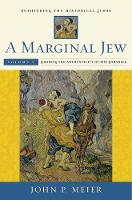
And now both have published important new books on the parables of Jesus: first, Amy-Jill Levine, Short Stories by Jesus: the Enigmatic Parables of a Controversial Rabbi (San Francisco: HarperOne, 2014); next John P. Meier A Marginal Jew: Rethinking the Historical Jesus, Volume V: Probing the Authenticity of the Parables (ABRL; New Haven: Yale University Press, 2015). Since I’m teaching a graduate course on the Synoptic Gospels this Spring, I’m currently working through both volumes simultaneously. (Alas, I never had a class on the parables with either of them.) The experience of reading the two alongside one another has been fascinating.
        On the one hand, there are several striking similarities between the two books.
First, for anyone familiar with either Levine or Meier, it goes without saying that both books are extremely well written. Meier’s clarity over the course of such a massive project as A Marginal Jew (5 volumes and counting) is more than enviable, and Levine’s combination of concision and consequence is more than refreshing. This is especially true in a field where scholarly writing that is long-winded (or “prolix,” as A.-J. kindly described one of my papers when I was a student) is all too common. From a purely aesthetic perspective, both authors are a sheer delight to read, frequently peppering their in-depth analyses with humor, insight, and a command of the English language that is something every student in New Testament studies should read carefully and attempt to emulate.
Second, both Levine and Meier’s volumes repeatedly challenge several major scholarly consensuses about the parables of Jesus. Over and over again, Levine and Meier set lots of cats among the pigeons. In every single chapter (and often on every page), Levine blows out of the water common assumptions that are made by interpreters of the parables. She made this reader (at least) realize just how much of what we we think we know about the parables of Jesus is often the result of unexamined assumptions and interpretive moves neither firmly grounded in the text nor the world of Jesus of Nazareth.  In the same vein, Meier begins his book by laying out “Seven Unfashionable Theses” (30-81), in which he takes issue with a number of widespread (but in his view erroneous) assumptions that continue to plague scholarship on the parables. The most controversial will surely be Thesis 7: “relatively few of the parables can meet the test of the criteria of authenticity that other sayings and deeds of Jesus are supposed to meet” (48). This stands in stark contrast to a long-standing scholarly consensus going back at least as far as Adolf Jülicher that the parables constitute a “particularly firm historical foundation” for historical research (J. Jeremias, The Parables of Jesus, 11-12) and that “there is no part of the Gospel record which has for the reader a clearer ring of authenticity” (C. H. Dodd, The Parables of the Kingdom, 13). It’s important to point out that Meier is not denying that all or most of the parables go back to Jesus (although he does argue against the authenticity of a few). What he is claiming, however, is that the vast majority of the parables simply do not pass muster when it comes to his criteria of authenticity, especially multiple independent attestation. (He devotes a lengthy chapter to the literary dependence of the parables in the Gospel of Thomas on the Synoptics; cf. p. 89-188). Instead, Meier’s verdict regarding many of the parables is non liquet (not clear one way or another). Such an “academic ‘rebel yell’” (one of Meier’s more striking descriptions of his work! cf. 89) is sure to generate debate in the field of historical Jesus research.
Finally, both books interpret the parables attributed to Jesus in their first-century Jewish context. This is perhaps the most exciting and illuminating aspect of their respective volumes. Both Levine and Meier know their Second Temple Judaism, and the result of their mastery of the subject is often stunning. Over and over again, Levine bursts popular hermeneutical bubbles in parable interpretation: e.g., contrary to common claim, in first-century Jewish context, shepherds were not universally despised as outcasts in Jewish society  ("the Lord is my Shepherd," anyone?); stories whose central characters were female were not inherently offensive to ancient Jews (ahem..., the books of Ruth, Esther, Judith, anyone?); when the so-called prodigal son asks his father for his inheritance, he was not saying: “I wish you were dead!”, and so on. She is particularly good at showing how rabbinic evidence is often selectively misinterpreted in ways that lead to anti-Jewish interpretations. Her dispelling of many (implicitly or explicitly) anti-Jewish interpretations alone is worth the price of the book and make it a major contribution to the contemporary discussion of Jewish-Christian relations. As with all of the volumes of A Marginal Jew, Meier’ knowledge of Second Temple sources is astonishingly broad and precise, and he deploys it throughout the volume, especially in the final chapter on the “happy few” parables that pass his criteria of authenticity (see 230-362).
On the other hand, there are several important differences between the books.
            First, in terms of audience, Meier’s volume is clearly written for fellow-scholars, albeit in such a way that a non-specialist reader can follow. I realize that the Anchor Bible Reference Library was originally aimed at general audiences. But it is significant that the series is no longer published by Doubleday (a division of the trade book giant Random House) but rather by Yale University Press. Ever since the publication of Raymond Brown's massive commentary on John in the 1960s, the series has become more and more academic over the years, and A Marginal Jew is no exception (as the end-notes make abundantly clear). On the other hand, Levine’s book—both in terms of format (e.g., brief end-notes) and publisher (HarperOne)—is written for a much broader public. With that said, Gospel scholars and Jesus researchers deserve to read Short Stories by Jesus very carefully. For one thing, Levine's mastery of parables scholarship is impressive. Whoever you are, you will not walk away from this book without having learned something new about the parables. Even more important: Levine repeatedly documents how many of the false assumptions about early Jewish practice and belief that plague popular preaching on the parables can also be found in (and often derive from) the pages of scholarly commentators who have not done their first-century Jewish homework.
Second, when it comes to the authenticity of the parables, the volumes couldn’t be more different. On the one hand, Meier’s entire book—as the subtitle suggests—is about “probing the authenticity of the parables.” Which parables pass the historical criteria of authenticity, and which do not? How do these parables fit into the overall reconstruction of the mission and message of Jesus? In contrast, Levine’s book is decidedly not focused on the debate over historicity. There are no lengthy sections weighing the arguments for and against the authenticity each individual parable. Instead, after emphasizing that we do not of course have access to “an unmediated Jesus,” Levine gives “several… reasons for thinking he told many, if not most or even all, of the parables recorded in the [Synoptic] Gospels” (11, cf. 11-17). She does add to this the caveat that this does not mean that these are “exactly the words that Jesus originally spoke” (17). Instead, Levine states that her primary goal is twofold: to help contemporary readers attempt to hear Jesus’ parables through “first-century Jewish ears” as they would have been heard by Jesus’ audience before Easter, and then to “translate them so that they can be heard still speaking” (17). The effect is often to make the parables seem eminently plausible on the lips of Jesus. But if you're looking for lengthy discussions of the criteria of authenticity (and who isn't? Chris Keith? Anthony LeDonne?) you won't find them in Levine's volume. That's not her purpose.
            Third, because of these very different aims, Meier’s volume ends up focusing in detail on only a handful major parables which pass his initial “sifting” of potentially authentic candidates: the parables of the Mustard Seed, the Evil Tenants of the Vineyard, the Great Supper, and the Talents/Pounds (see 230-362). Anyone going to Volume 5 of a Marginal Jew hoping for an exegetical analysis of all (or even most) of the parables attributed to Jesus in the manner of Klyne Snodgrass’ Stories with Intent (Eerdmans 2008) will come away disappointed. That’s just not what Meier’s book is about. By contrast, Levine gives extended exegesis of many of the ‘major players’ in the corpus of Jesus’ parables: the Lost Coin, the Lost Sheep, the Prodigal Son, the Good Samaritan, the Kingdom is Like Yeast, the Pearl of Great Price, the Pharisee and the Tax Collector, the Laborers in the Vineyard, the Widow and the Judge, and the Rich Man and Lazarus.
      In order to avoid growing prolix, I’ll stop here. The upshot is simple: these two new volumes on the parables by Meier and Levine are must reading for students and scholars. Read together, they give both an overview of many of the major parables (Levine) and an in-depth discussion of questions of historicity (Meier). There is much to be learned here, and much to be debated by anyone engaged in historical Jesus research and the study of the Synoptic Gospels.

Wednesday, January 13, 2016

NT PhD Studentship at St Mary's University in CSSSB

I'm very happy to announce that St Mary's University is offering a PhD studentship (tuition at the home/EU rate plus £13,000 per annum) for someone looking to get a PhD in New Testament.  For anyone interested in coming to London to work with me, Prof Steve Walton, or Prof James Crossley, follow this link.  The deadline for application is March 28, 2016.  Interested students can direct questions to me (chris.keith@stmarys.ac.uk), Prof Walton (steve.walton@stmarys.ac.uk), or Prof Crossley (james.crossley@stmarys.ac.uk). 

Oral and written authority in early Christianity: A review on Jürgen Becker: Schriftliche und Mündliche Autorität im frühen Christentum, Tübingen: Mohr Siebeck 2012


Recently Rafael Rodríguez introduced Francis Watson’s new book “Gospel Writing” in this blog. Watson’s monograph is one of a series of books that have been published in the last years which deal with the development of Jesus tradition in the 1st and 2nd century and the process of canonization. In 2012, the German New Testament scholar Jürgen Becker also published a book that focused with these topics. However, he reaches quite different conclusions.

At the center of Becker’s interest lies the relationship between orality and literacy, between the oral Jesus tradition, the oral Gospel, on the one hand and the written sources on the other. This interest is embedded in a long history of research. Since the 18th century and the beginning of historical-critical research on the Gospels, the relevance of oral tradition in early Christianity has been an issue of debate. How influential was oral Jesus tradition? How long was it maintained and cultivated, even after the emergence of written Gospels? In what way did the oral tradition influence Gospels that would become canonical as well as those that would become apocryphal? And, finally, how reliable was oral Jesus tradition in general? Was it trustworthy or rather prone to variation and transformation?

The debate on oral Jesus tradition emerged in connection with the “synoptic problem”. Scholars from different fields became interested in folk poetry and folk tales. In this intellectual climate Johann Gottfried Herder interpreted the relationship between the synoptic Gospels through their dependence on an orally circulating proto-Gospel. That would implicate that the tradition was handed down anonymously for a time, and that it may have been subjected to fictional inventions and further elaborations. In order to put the Gospel tradition on a firm and reliable foundation (and also as an argument against the myth criticism of David Friedrich Strauss), Christian Hermann Weisse developed the two-source-hypothesis (1838). It was intended to explain the entire synoptic tradition through relying on literary sources, leaving no room for oral, uncontrollable changes of the tradition. However, at present there are, as is well known, several objections at least against Weisse’s simple version of the two-source-hypothesis: One of the main objections is that not every single textual phenomenon can be explained through literary sources. Whether “Q” was oral or written is disputed in current scholarship. We can find many echoes of synoptic tradition in the writings of the so-called Apostolic fathers that differ from the written Gospels in their actual wording. Furthermore, apocryphal writings in the 2nd century are sometimes based on synoptic tradition without referring to it explicitly. All of this suggests a living oral tradition, a common practice of citing from memory and the phenomenon of “secondary orality”.

Jürgen Becker draws the conclusion that the one, oral Gospel about Jesus Christ was popular until well into the 2nd century. In comparison to that Gospel, the first written Gospels were regarded only as secondary and derivative. They only slowly gained popularity and were not very widespread at first. The high importance of the oral Gospel, Becker argues, can be traced back to Jesus. He was illiterate, preaching orally in the synagogue and using motives and themes of the Scriptures freely, and he did not refer to written texts.
The first Christians followed his example by orally handing down Jesus tradition and orally proclaiming the kerygma of Christ and the prophetic announcement of his coming. The Gospels which would become canonical were not read in Christian liturgy immediately after their emergence. Their later, gradual use in the Christian service also initiated the liturgical practice of reading from the Scriptures of Israel. Both practices, reading Christian Gospels and the prophets of the LXX, evolved in a parallel process. The Christians first had to develop a sense for literacy.

Becker regards the “apocryphal” Gospels as products of the reception history of the four oldest Gospels: Mark, Matthew, Luke and John. They were formed mainly on the basis of secondary orality. In comparison to the synoptic Gospels they show significant differences in their content and their intent. Often they filled out the narrative of the life of Christ, for example by elaborating on the infancy stories, or by focusing on the post-Easter events. Appearances and instructions of the risen Christ are especially popular components of Christian pseudepigraphic writings of the 2nd century. It is then the risen Christ who, instead of the earthly Jesus, proclaims his authoritative teachings, and only the apostles (or only some of them) become exclusive recipients of his teaching. By referring to the example of the Epistula Apostolorum, a pseudepigraphic letter of the apostles, Becker demonstrates that in some cases “apocryphal Gospels” were written to settle Christological debates. Such writings transmitted Christological convictions under the authority of Jesus Christ and his teaching.

Although there are some points to be criticized, Becker’s monograph is an interesting contribution to the ongoing debate about oral tradition and written texts and their influence on the process of canonization, and the book can be read as a counterpart of Watson’s conception of early Christian literature.

Friday, January 8, 2016

Was the Last Supper on Wednesday? (A Review of Colin Humphreys' The Mystery of the Last Supper)

Since the publication of Jesus and the Last Supper, I have gotten more than one request from readers for my thoughts on Colin J. Humphreys' hypothesis that Jesus celebrated the Last Supper on Wednesday night according to a special pre-exilic lunar calendar. Although my chapter on the date of the Last Supper is 120 pages, I still didn't have space for an extended treatment of his theory. Below is a brief review of Humphreys' theory. I thought it might be interesting to readers of the Jesus blog intrigued by the debate over the chronology of Jesus' last days in Jerusalem. Enjoy.

Colin J. Humphreys. The Mystery of the Last Supper: Reconstructing the Final Days of Jesus. (Cambridge: Cambridge University Press, 2011). A Review by Brant Pitre.

This contribution to the age-old debate over the date of Jesus’ Last Supper is truly unique. For one thing, Humphreys is not a biblical scholar but a professor of Materials Science and Metallurgy at the University of Cambridge, who has published previously in calendrical and biblical studies. Moreover, unlike many other treatments of the date of the Last Supper, the book draws heavily on up-to-date astronomical calculations of Graeme Waddington, an Oxford astrophysicist, with whom Humphreys has co-authored several articles in refereed journals. Finally, Humphreys proposes a truly novel solution to the apparent chronological contradiction between the Synoptic and Johannine chronologies of the death of Jesus. He argues that Jesus neither celebrated the Last Supper on Thursday evening (the traditional date) nor on Tuesday evening (as proposed by Annie Jaubert and others). Instead, Humphreys contends that Jesus celebrated the Last Supper on Wednesday evening of his last week. According to Humphreys, Jesus was following a special pre-exilic lunar calendar inherited by the Israelites from ancient Egypt and later used by Samaritans (and possibly Galileans) in the Second Temple period.

Summary of Contents
The book can be roughly divided into four parts: First, Humphreys begins with an overview of the date of the Last Supper debate and highlights the weaknesses of previous solutions (chs. 1-3). Second, he then draws on the astronomical calculations of Waddington in order to propose an exact calendar date of the crucifixion (chs. 4-5). After a painstaking analysis of multiple options, Humphreys concludes that Friday, April 3, AD 33 is “the only possible date” (p. 72). In support of this conclusion, he contends that that Peter’s speech at Pentecost about “wonders in the heaven” and “the moon” being “turned to blood” (Acts 2:19-21) is a historical reference to an actual lunar eclipse that was visible in Jerusalem on the same day as the crucifixion (ch. 6). Third, Humphreys deals with the date of the Last Supper proper by devoting an entire chapter to outlining and rejecting the theory that Jesus followed the Qumran solar calendar (ch. 7). He then goes on to suggest that while the official Jewish calendar at the time of Jesus—a sunset-to-sunset lunar calendar—originated in the Babylonian exile, there existed a pre-exilic sunrise-to-sunrise lunar calendar, akin to the religious calendar of ancient Egypt and the lunar calendar used by the Samaritans (ch. 9-10). The existence of these two calendars side-by-side led to confusion within the Hebrew Bible itself over whether, for example, the feast of Unleavened Bread started on 14 Nisan (Exod 12:17-19; Ezek 45:21) or 15 Nisan (Lev 23:6; Num 28:17). Humphreys suggests that not only the Samaritans, but perhaps also Galilean Jews, may have continued to use this pre-exilic lunar calendar, leading to at least a one-day divergence in the dating of the Passover (pp. 147-48). He then concludes by arguing that (in part) because Jesus saw himself as a new Moses, he deliberately followed the pre-exilic calendar. Moreover, the Gospels, when read carefully, suggest that more than one day transpired between the Last Supper (Wednesday night) and the crucifixion (Friday morning) (chs. 11-13).

Strengths: Clarity, Depth, Critique of Essene Hypothesis
The strengths of Humphreys’ study are several. The book is very clearly written, and makes the complex subject of ancient calendars and the date of the Last Supper remarkably accessible. Moreover, the author demonstrates a firm grasp of the secondary literature in English on the date of the Last Supper. Finally, Humphreys offers an intriguing critique of Jaubert’s theory that Jesus followed the Qumran solar calendar. He points out that in the book of Enoch (which reflects the solar calendar), the first day of the first month (1 Nisan) always falls after the spring equinox, with the significant result that the solar Passover would consistently take place after the lunar Passover (see 1 Enoch 72). Hence, according to Humphreys: “Jesus could not have used the Qumran calendar to celebrate his last supper as a Passover meal since, whether it was intercalated or not, Passover in the Qumran calendar did not fall in the same week as Passover in the official Jewish calendar” (p. 109). If correct, this is a significant point, since even recent defenses of Jaubert continue to assume without demonstration that the solar and lunar Passovers took place during the same week. See, e.g., Stéphane Saulnier, Calendrical Variations in Second Temple Judaism: New Perspectives on the 'Date of the Last Supper' Debate (JSJSup 159; Leiden: Brill, 2012). In other words, there is no way for Jesus to have celebrated the solar Passover of the Essene if the Essene Passover did not take place the same week that he was crucified.

Weaknesses: Observation, Intercalation, Agricultural Conditions, and Gospel Exegesis
On the other hand, there are several serious weaknesses with Humphreys’ overall hypothesis.
First and foremost, Humphreys’ study operates on the dubious assumption that we can use contemporary astronomical calculation to determine the calendar dates of ancient Jewish liturgical feasts which were based on human observation of the new moon. Cf. R. T. Beckwith, Calendar and Chronology (Leiden: Brill, 2001), 276-96. For example, according to the Mishnah, “while the Temple still stood” the determination of the exact date of the Passover feast was completely based on whether or not the new moon is “manifestly visible or not” (Mishnah, Rosh Hashanah 1:1-9). As John Meir pointed out some time ago, this means that the declaration of the new moon (and hence the date of Passover) “depended not on whether the new light actually existed, but on whether human beings had seen it” (Meier, A Marginal Jew, 1.401-402). As Humphreys himself admits, when it comes to an observation-based lunar calendar, there is always at least a one-day margin of error involved in the ancient method of detecting a new moon, since “poor atmospheric transparency” can never be ruled out (p. 50). It should go without saying that using calculations with a 24-hour margin of error cannot be conclusive for solving the problem of an apparent 24-hour chronological discrepancy. 
     Second, Humphreys study also largely ignores the enormous problem of ancient Jewish intercalation (e.g., leap years and leap months). Humphreys admits again that we have no clear idea how first-century Jews, whether in the solar or lunar calendars, dealt with intercalation and leap years (p. 56).  To be sure, the the Tosefta records a lengthy rabbinic debate about  a number of competing and contradictory ideas about when or when not to intercalate (see Tosefta, Sanhedrin 2:9-12). But even if we assume that the multiplicity of views reflected in the Tosefta were in play in the first-century A.D. (a questionable assumption), we still have no idea which method of intercalation was being employed by the first century Temple authorities, to say nothing of whether and how it affected the liturgical calendar in the particular year that Jesus died. Apart from knowledge of what method of intercalation was being used by Temple authorities in the exact year Jesus died, the correspondence between contemporary calculations and ancient liturgical practice must always remain speculation and thus cannot be used to solve the question of the date of the Last Supper. This is particularly important for Humphreys’ novel suggestion of a Wednesday Last Supper, since it is based almost entirely on an argument from astronomical calculations that the “only possible date” 14 Nisan in the pre-exilic sunrise-to-sunrise lunar calendar could have occurred was Wednesday, April 1, AD 33 (p. 163-64).
    Third, Humphreys’ hypothesis fails to reckon with the fact that, according to most ancient evidence we possess, the Jewish system of intercalation for the Passover feast was also contingent on weather and agricultural conditions that were variable each year. For example, the Tosefta attributes a saying to Rabbi Gamaliel to the effect that if that year was a long winter and the “lambs were too thin” and “the first-ripe grain has not yet appeared,” then “thirty days” were to be “add[ed]” to the year in the Spring, to give the lambs and the grain time to grow (Tosefta, Sanhedrin 2:5-6). This means that if there was a long winter the year Jesus died, then Jerusalem authorities could have added an entire month to the calendar in order to give the Passover yearling lambs and the first shoots of barley time to ripen. This would obviously cause any modern-day calculations based solely on astronomy to fall to pieces, since we have no way of knowing what the weather conditions were like in the year Jesus crucified (especially when we remain unsure about exactly what year that was). 
     Fourth, and most important of all, although the astronomical sections in the book are impressive and meticulous, Humphreys’ discussion of the actual exegesis of the Gospel accounts of the Last Supper and passion of Jesus have serious weaknesses. It goes without saying that the Gospel accounts themselves say nothing about Jesus following a special pre-exilic lunar calendar, despite Humphreys' valiant attempt to transform Mark's description of "the first day of Unleavened Bread (azymōn)" as the day when "the Passover lamb (pascha) was sacrificed" (Mark 14:12) into evidence that Jesus and his disciples were following a different calendar from the Jewish Temple. However, this supposed "anomaly" in Mark 14:12 is easily explained from by the linguistic fact that, by the first-century A.D., the distinction between "Passover" (pascha) (14 Nisan) and "Unleavened Bread" (azymōn) (15-21 Nisan) often disappeared in common parlance. Indeed, both Luke and Josephus make clear that the two terms could be used interchangeably: 

"The feast of Unleavened Bread, which is called Passover" (Luke 22:1)

"The feast of Unleavened Bread, which we call Passover" (Josephus, Antiquities 14:21; 18:29)

 "We keep for eight days a feast called the feast of Unleavened Bread" (Josephus, Antiquities 2:317)

In other words, either term could be used to refer to the entire Passover octave (See Pitre, Jesus and the Last Supper, 338-39). Hence, contrary to what some scholars contend, it is not Mark here who is ignorant of things Jewish; it is we who are ignorant of and sloppy in our assertions about first-century Jewish Passover terminology. For what it's worth, a similar fluidity exists today in Catholic circles with the word "Easter," which can refer to (1) the Easter vigil on Saturday evening, (2) Easter Sunday, (3) the Easter Octave, or even (4) the seven week Easter season. It is no coincidence that the Latin word for "Easter" is pascha!
      Moreover, although a Wednesday Last Supper would indeed provide more time for the number of events recounted in the Gospels, it highly questionable that a multi-day chronology of Jesus’ passion is “the natural reading of all four Gospels” (p. 185). The overwhelming majority of Gospel interpreters over the centuries, from the earliest patristic writers to today, have discovered only one night transpiring between Jesus’ Last Supper on Thursday night and his crucifixion on Friday morning (see Justin Martyr, Dialogue with Trypho, 111.3; Irenaeus, Against Heresies 2.22.3). Indeed, the accounts of Peter’s denials and the morning “cock-crow” in the Synoptics and John clearly suggest the passing of only one night before Jesus execution (see esp. Mark 14:30, 66, 72; 15:1; John 13:38; 18:26-28). This is perhaps why Humphreys rather awkwardly and unconvincingly tries to explain these Gospel passages away (pp. 178-80). Also unconvincing is Humphreys' idiosyncratic suggestion that the Gospels narrate two "successive" daybreak "trials"of Jesus--a "first" trial on Thursday morning (supposedly recorded in Luke 22:66-71) and a "second" on Friday morning (cf. Mark 15:1; Matt 27:1)(see pp. 225-36 n. 28). Although correlating the trial narratives has well-known difficulties, the much more natural reading is that Luke is expanding Mark's brief reference to a single daybreak gathering of the Sanhedrin on Friday morning in which Jesus is bound and led away (Mark 15:1). 

Conclusion
In short, despite a truly impressive knowledge of astronomy and a truly unique contribution to the debate, Humphreys’ attempt offer a solution to the date of the Last Supper fails to reckon with the fact that ancient Jewish liturgical calendar appears to have been contingent upon observation, seasonal shifts, and an unknown method of intercalation. Most important of all, the overarching hypothesis fails at the level that any viable theory must succeed: the actual exegesis of the Gospel texts.  Not least because a Wednesday Last Supper cannot be found in or reconciled with the Gospel accounts themselves, Humphrey’s astronomical solution, however ingenious, is ultimately unconvincing. The point bears repeating: "For better or for worse, the question of when the Last Supper took place and whether or not it coincided with the Jewish Passover meal must be settled on the basis of the textual evidence in the Gospels" (Pitre, Jesus and the Last Supper, 313).