Baker Academic

Thursday, September 11, 2014

Is Memory Selectivity Bad? - Le Donne

Here at the Jesus Blog, we're into hot topics from the 1930s. For instance we both have strong opinions about the dust bowl and don't get us started on the so-called "Hoover Dam." And we're not shy to point out that flappers are soooo 1920s. Whatevs! So it will come as no surprise that Chris and I have followed the career of French sociologist, Maurice Halbwachs with great interest.

Halbwachs (1877-1945) is now hailed as the father of "social memory" (although few social memory theorists today swallow his theories entire). Halbwachs believed that all memory is socially conditioned and framed. He also defined the sociological concept of "collective memory" in his study of how groups tend to remember and commemorate. Ah, the good ole days! But it has only been in the last decade that Halbwachs has been widely utilized in historical Jesus research. My own research built on his and extended it toward a concept called "memory distortion." In echo of Halbwachs many contemporary social memory theorists will grant that all memory is "memory distortion." After all, all memory is selective (by the way, memory selection is only one form of memory distortion). Memory requires the selection of thoughts and thought patterns that will not be forgotten. My own work has pushed this feature of memory back to the initial stages of perception. In short, to paraphrase Heidegger, to perceive is to construe.

But is this a problem?

We can easily come up with instances where memory selectivity is unfortunate or malicious. Indeed the very concept of "distortion" carries negative connotations. But recently I was reminded of why the selectivity of memory is so very important. This article relays a study of student recall. It seems that students who take notes longhand tend to remember better:
Students who take notes in longhand, in contrast, cannot write fast enough to get everything down and so must be selective. It is precisely that process—of summarizing, thinking about what’s most important, predicting what might be useful down the road—that helps those who take notes on paper.
These features of "summarizing, thinking about what’s most important, predicting what might be useful down the road" are all known well to researchers of memory distortion. Indeed all of the above focus memory and frames it within an agenda. Here the agenda involves making a grade. It is often the case, moreover, that students will be rewarded for taking something they heard in a lecture and transforming it into an original thought of their own. This process of creativity requires an ability to distort memory within acceptable parameters and account for their own ideas in relationship to previous thought patterns. I.e. the fact that students to not parrot their professor exactly is a virtue.

I think that this sort of research is fascinating and will continue to help Jesus scholars rethink the relationship between the Gospels and the historical Jesus.

-anthony

Tuesday, September 9, 2014

Was the Gospel of John Composed Independently?

The above poll is meant to measure how many Jesus Blog readers hold the view that the Fourth Gospel was composed with knowledge of or direct dependence on Synoptic tradition.

Feel free to comment below.

-anthony

Monday, September 8, 2014

Take a Gospels Trivia Quiz

This quiz is designed to make Christians feel stupid. So if you're a Christian and you like to feel stupid, this quiz is for you!

Kidding aside, this a bit obnoxious. But if you can get over that element, it is a clever way to combat the tendency to harmonize the Gospels. Enter at your own risk:

http://exchristian.net/3/

-anthony

Sunday, September 7, 2014

Quarterly Quote of the Month about Jesus for this Week


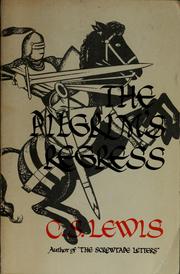
They say that after eating the mountain-apple and the earthquake, when things in our country had all gone awry, the Landlord’s Son himself became one of his Father’s tenants and lived among us, for no other purpose than that he should be killed. The Stewards themselves do not know clearly the meaning of their story: hence, if you ask them how the slaying of the Son should help us, they are driven to monstrous answers.

             
                ~Mr. Wisdom from C. S. Lewis’ The Pilgrim’s Regress

Friday, September 5, 2014

Does Peter Enns Represent the Lord Correctly?

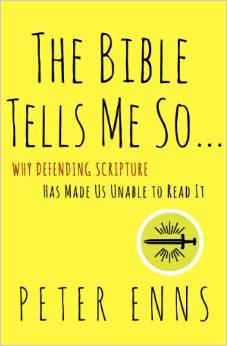
Friend of the program Peter Enns provides an excerpt of his new book, The Bible Tells Me So: Why Defending Scripture Has Made Us Unable to Read It. Dr. Enns offers a brief reading of Mark 12:35-37 (I'm guessing that he's not using Matthew, as Matthew goes an entirely different direction with this saying). According to the NRSV, this passage reads:
35 While Jesus was teaching in the temple, he said, “How can the scribes say that the Messiah is the son of David? 36 David himself, by the Holy Spirit, declared,
‘The Lord said to my Lord,
“Sit at my right hand,
until I put your enemies under your feet.”’
37 David himself calls him Lord; so how can he be his son?” And the large crowd was listening to him with delight.
Dr. Enns suggests that Jesus is using Psalm 110 to say something about his status as "messiah" in this passage. This is something that, according to Enns, "got him into trouble with some influential Jewish authorities of his day." But it isn't clear to me that Jesus is referring to himself in this passage. I've just posted this comment over at his blog:
Pete, I think you are quite right that Jesus read his Bible differently than I do. Indeed Paul, Matthew, John, etc. all use the Hebrew Bible in ways that wouldn't be acceptable in my classroom. So to your primary point, I agree. But I have a more exegetical question related to Mark 12:35-37. It isn't clear to me that Jesus is referring to himself in this saying. Could he have been referring to a popular misnomer concerning "the messiah"? I.e. could he have been speaking generally about "the messiah" for the sole purpose of making the scribes look bad? I'm asking because this passage is among the most vexing in the NT, not because I have the right answer.

-anthony

Wednesday, September 3, 2014

Quest for the Real Jesus JTS Review—Chris Keith

My full review of The Quest for the Real Jesus: Radboud Prestige Lectures by Prof Dr Michael Wolter (Brill 2013) in Journal of Theological Studies is now available online here.  In the review itself, I made the mistake of referring to the university as "Radbound" instead of "Radboud."  Sorry 'bout that.

Tuesday, September 2, 2014

Quarterly Quote of the Month about Jesus for this Week


"...the next day the miracle occurred! Crucifixion, then resurrection! And he rose again from the dead! And if he sees his shadow, another 2000 years of guilt. Yes!"

                ~Robin Williams

Monday, September 1, 2014

The Latest at Sheffield—Chris Keith

[UPDATED Sept 2, 2014, see below]

I was very sorry today to read of the latest at Sheffield in the midst of the official death of its once-great Department of Biblical Studies.  As The Dunedin School and Jim West report, apparently the school's PR team had taken quotations from eminent scholars--written in letters opposing the closing the department--and used them as statements of endorsement.  This includes a quotation from Maurice Casey, who is now passed and was as bitterly opposed to the closing of the Department of Biblical Studies as anyone.  As far as I can tell, the quotations are no longer on Sheffield's pages, though the blogs named above have screen shots of the earlier pages.

Sheffield has always functioned as something of a myth for me, associated in my mind with names like Bruce, Alexander, Clines, and Moore.  One of the very influential professors I had in undergraduate received his PhD from Sheffield during Stephen Moore's short time there, and I was really impressed with that professor and thus with Sheffield.  I considered it a real honor to deliver a lecture there last year in the famed Biblical Studies Seminar at the invitation of Minna Shkul and James Crossley. 

*UPDATE Sept 2, 2014

In the comments section of The Dunedin School post noted above, someone (signed in as "someone who used to edit the bibs website") has left the following message, indicating that the scholars quoted had given their permission to be used in the context of promoting Biblical Studies at Sheffield, including Maurice Casey.  Perhaps we should take a deep breath.  I quote from The Dunedin School comments (HT Mark Goodacre):

Someone who used to edit the bibs website said:
I have in my possession written consent from all of these scholars, including the late Maurice Casey (see below), for the use of their words in the fresh context of marketing the department. These permissions date back to December 2009 when I had personal responsibility for an overhaul of the site. While I understand people’s distaste, it did not seem distasteful to use these for the department in 2009 and one should not be too quick to throw stones at marketing people who were trying to serve the Department’s future.
I quote first from my email to Maurice:
———-16/12/2009————
Following the success of the campaign to preserve the Biblical Studies
department here in Sheffield, we are now looking at the information provided to
potential students on the department’s web site.
We’d like to use the following quotation extracted from your letter to the
Vice-Chancellor (and published on savebiblicalstudies.weebly.com):
“…the exceptional combination of creativity and independence of mind shown by
members of staff in their publications and at academic conferences.”
“I’d be grateful if you can confirm that we are okay to go ahead and use this.
The quotation would be attributed to you, and you should feel free to amend it
first if desired.”
———————————
And from his response to me (also 16/12/2009):
———————————
“Thank-you for your e-mail. You are very welcome to quote this comment, and please attribute it to me, I do not wish to amend a single word.
“I hope you are successful in attracting new students, and that management will provide new staff on the scale that you need, in accordance with the quality traditional in the Department and found in the few staff left.”
——————————–
This was not “The University” acting but someone affiliated with the department keen to preserve it and doing so with what was, however distastefully one may now view it, some extremely good marketing material. I would never have dreamt of using any of it without permission, and one ought not to be too hasty to judge whoever it was within the university that made the decision to go on using it. It is in any case quite possible that I wrote the page you are referring to and these quotes will have been on the site since January 2010. Staff in the department would have been aware of this use of material at the time, even if there’s been enough water under the bridge to lose track.

Thursday, August 28, 2014

Paul Anderson on Bultmann's Legacy

In reply to Butlmann week here at the Jesus Blog, Paul Anderson writes:

Thanks for your pointed question on Bultmann’s contribution, Anthony and Chris; in addition to the excellent collection on Bultmann’s New Testament theology edited by Longenecker and Parsons, I have just gotten his commentary on John back into print in paperback as Vol. 1 in the new Johannine Monograph Series (as of August 15, Wipf & Stock) edited by Alan Culpepper and myself (https://wipfandstock.com/browse/series/Johannine%20Monograph%20Series). Here’s what I say in the rather extensive Foreword (pp. i-xxviii), fyi:

“As the first volume in the Johannine Monograph Series, The Gospel of John: A Commentary by Rudolf Bultmann well deserves this place of pride. Indeed, this provocative commentary is arguably the most important New Testament monograph in the twentieth century, perhaps second only to The Quest of the Historical Jesus by Albert Schweitzer…. In contrasting Bultmann's and Schweitzer's paradigms, however, we find that Bultmann’s is far more technically argued and original, commanding hegemony among other early-Christianity paradigms. Ernst Haenchen has described Bultmann's commentary as a giant oak tree in whose shade nothing could grow, and indeed, this reference accurately describes its dominance among Continental Protestant scholarship over the course of several decades.”

Any familiar with my treatment of Bultmann’s approach to John (in over 100 pages of analysis in The Christology of the Fourth Gospel) or in the treatments by Jörg Frey will know that while Bultmann’s highly diachronic approach to John’s composition does not convince overall, his theological sensitivity to John’s tensions and riddles is first rate. Therefore, even in a synchronic approach to John, such as the recent thoughtful-yet-traditional New International Commentary, Ramsey Michaels declares that the most helpful single resource in writing his commentary was that of Rudolf Bultmann. That sentiment is confirmed by your informal poll, and I would concur overall, although I differ with Bultmann in seeing John’s tradition as being more coherent and autonomous, in addition to being developed theologically.

Interestingly, despite Bultmann’s treatment of dialectical thinking as the basis for theological and historical reasoning in his 1927 Eisenach address, he refuses to allow the Fourth Evangelist to be seen as a dialectical thinker. He thus wrongly attributes John’s material to inferred alien sources, rather than seeing them as elements of an individuated tradition. In that sense, Bultmann also fails to note the highly dialectical intratraditional engagement of the evangelist, in addition to his intertraditional work, and more recent studies have cast valuable light on the highly dialectical Johannine situation. What Bultmann would concur with, however, is the evangelist’s treatment of the human-divine dialogue, which the Revealer conveys to humanity, calling forth an existential response of faith to the divine initiative. Hence, in the light of John’s dialogical autonomy, we might infer that…in the beginning was…the Dialogue!

Paul Anderson

McGrath reviews the Fortress's Inkling Project for the Bible

Over at exploringourmatrix, James McGrath offers his initial impressions of this project:


I was part of the team that turned Sumney's introduction into an e-book with tags, pop-out boxes, e-quizzes, maps, and photographs that enhance the digital experience of the student and professor.

-anthony

Wednesday, August 27, 2014

The Meaning of Crucifixion - Le Donne

There have been a handful of excellent studies on crucifixion circa Jesus’ context in the past ten years. Here are two monographs to consider: Samuelsson and Chapman. Unfortunately too many folks still fumble a bit with vague explanations of crucifixion. I've done a bit of fumbling myself at times. The popular notions of crucifixion as "the slave's death" and as "reserved for insurrectionists" are perhaps close to the mark, but not quite as helpful as they could be. As these two vague descriptions stand, it is hard to see how both could be true without qualification. I've previously attempted to explain that we see a particular status demotion to enemies of the state in crucifixion. In other words, the victims might have aspired to grandeur, but died as slaves. But I don't think that this quite hits the mark either.
Last week I was reading an essay by Joel Marcus published in 2006. Marcus writes:

"…this strange exalting mode of execution [crucifixion] was designed to mimic, parody, and puncture the pretensions of insubordinate transgressors by displaying a deliberately horrible mirror of their self-evaluation. For it is revealing that the criminals so punished were often precisely people who had, in the view of their judges, gotten "above" themselves. Rebellious slaves, for example, or slaves who had insulted their masters, or people of any class who had not shown proper deference to the emperor, not to mention those who had revolted against him or who had, through brigandage or piracy, demonstrated disdain for imperial rule. Crucifixion was intended to unmask, in a deliberately grotesque manner, the pretension and arrogance of those who had exalted themselves beyond their station; the authorities were bent on demonstrating through the graphic tableau of the cross what such self-promotion meant and whither it led. Crucifixion, then, is a prime illustration of Michael Foucault’s thesis that the process of execution is a “penal liturgy” designed to reveal the essence of the crime. …. The greater the insolence, the higher the cross; the proper response to excessive haughtiness was, in the words of the Clint Eastwood film, to "Hang ‘Em High!" (“Crucifixion as Parodic Exaltation,” JBL 125 [2006]: 73-87, here pp. 78-79.)

Tuesday, August 26, 2014

Translating Ioudaios ("Jew" or "Judean") on Marginalia—Chris Keith

If you're not on the Marginalia train, get on.  I'm convinced that T. Michael Law, the editor-in-chief (pictured here), has seen the future and is leading Biblical Studies and Religious Studies in the right direction.  In short, he's figured out how to do online peer review in a format that's better than anything else out there, basically combining the best of old-school peer review, articles, and the interactive possibilities of blogs, not to mention the fact that reviews can run much longer because there's not a word limit in this format.  A case in point is the recent discussion on Marginalia on how to translate Ioudaios ("Jew" or "Judean").  Adele Reinhartz published a short article on Marginalia ("The Vanishing Jews of Antiquity") about the recent trend in scholarship of using "Judean" instead of "Jew."  The comments section went nuts with all kinds of people weighing in.  Law then organized a forum on the topic with contributions from Reinhartz, Steve Mason, Daniel Schwartz, Annette Yoshiko Reed, Joan Taylor, Malcolm Lowe, Jonathan Klawans, Ruth Sheridan, and James Crossley.  Those familiar with the scholarly literature will recognize that these are basically all the important voices on the topic past and present.  The forum is now appearing on Marginalia and you can link to it here.  Marginalia is also making the entire forum available for download as an e-book. 

I think it's worth pointing out just how incredible not only this collection of scholarly voices is but also the manner in which this has arisen.  Even twenty years ago, if you wanted to find out what all these people thought about the topic, you'd have to wait six to eighteen months after any one of them published an article, because that's when the responses would eventually get published, and that's if the respondent wrote immediately after the initial article came out.  The whole discussion would take two to three years to occur, at least.  Now, Reinhartz publishes a provocative and important piece on June 24 and just two months later we have a published forum from the leading scholars on the topic.  My hat is off to T. Michael Law.  Lead on.

Monday, August 25, 2014

British New Testament Conference 2014—Chris Keith

The British New Testament Conference is just around the corner.  This year it's on Sept 4–6 and is being held at the University of Manchester.  Along with Helen Bond, I chair the Jesus and Gospels Seminar.  We're pretty proud of the lineup we've arranged for this year.  One session will feature a panel discussion of Rafael Rodriguez's and Eric Eve's new books on orality.  Another session will be a panel review of Jens Schröter's From Jesus to the New TestamentThe middle session will feature papers from Jesse Nickel, Crispin Fletcher-Louis, and Markus Bockmuehl.  The full information, with abstracts for the papers, is below.  By the way, because Jens needs to leave early on Saturday, the panel review for his book will start at 8:30 am, not the typical 9:00 am.


Session 1 (Friday morning)
 
“Orality and the Gospels”: A Discussion with Eric Eve and Rafael Rodríguez

Eric Eve (Fellow and Tutor in Theology, Harris Manchester College, Oxford), author of Behind the Gospels: Understanding the Oral Tradition (SPCK, 2013)

Rafael Rodríguez (Professor of New Testament, Johnson University, USA), author of Oral Tradition and the New Testament: A Guide for the Perplexed (T&T Clark, 2014)

Discussion (30 mins.)

 
Session 2 (Friday afternoon)

Paper 1 (30 mins.)—The Battle with Beelzebul: Eschatological Violence, Jesus’ Exorcisms,
and the Coming of the Kingdom of God (Jesse Nickel, PhD Candidate, University of St Andrews)

Abstract: 

All three Synoptic Gospels record the accusation made against Jesus that it is through being in league with Beelzebul, the archōn of the demons, that Jesus is able to exert his mighty power over the evil spirits he encounters (Mt. 12.22-32 // Mk. 3.19b-30 // Lk. 11.14-23). In all three, Jesus responds with familiar words about kingdoms divided against themselves and the binding of the strong man. However, Matthew and Luke both add an intriguing extra statement, with which Jesus makes it clear that his casting out of demons, rather than indicating partnership with the powers of evil, in fact signifies the presence of the kingdom of God (Mt. 12.28 // Lk. 11.20). Using this pericope as a starting point, in this paper I will explore the connection between Jesus’ exorcisms and the inauguration of the kingdom of God in the Synoptic Gospels, in the context of the historical eschatological expectations of second-Temple Judaism. Although the portrayals of eschatological events in Jewish writings from this period are diverse, one of the nearly unanimous expectations was that the arrival of the kingdom of God would entail the violent destruction of all the enemies of God and/or his people (cf., e.g., Dan. 7; 1 En. 85-90; 1QM). I will discuss how this component of second-Temple Jewish eschatology was represented and manifested in the kingdom-ministry of the Synoptic Jesus. I will argue that, counter to many of his Jewish contemporaries, who expected that this would involve a holy war waged by the faithful against their Gentile oppressors, Jesus understood himself to be prosecuting the expected eschatological battle in his encounters with evil spirits – the true enemies of God and his people. In these mighty deeds, the anticipated victory which would attend the inauguration of the kingdom of God was being won.

 Paper 2 (30 mins.)— Jesus’ divine self-consciousness: a proposal (Crispin Fletcher-Louis, Research Director, Whymanity Research and Training)

 Abstract:
This paper will sketch the conceptual framework for a new approach to the study of the historical Jesus; specifically Jesus’ own contribution to the origins of the early Church’s so-called “Christological monotheism” and Christ devotion. The paper will summarise the relevant sections of the second volume of my forthcoming book (Jesus Monotheism: A New Paradigm for the Shape and Origins of the Earliest Christology), in which I argue that, taken together, the OT and the NT—along with the historical evidence for Second Temple life and thought—all point to Jesus’ own self-consciousness as a heaven-sent, and uniquely “divine”, priest-king of a new eschatological order (or covenant) as a decisive, determining, factor in Christological origins.

Paper 3 (30 mins.)—The God of Israel and the Eschatology of Jesus (Markus Bockmuehl, Lady Margaret's Professor of Divinity, Oxford)

Contrary to recent critiques of monotheism’s supposedly intrinsic authoritarianism, Jesus of Nazareth's strongly theocentric eschatology shaped a nonviolent opposition to evil—whether its manifestation appeared individual or communal, moral or political, demonic or structural. At the same time, an active negotiation of eschatological tension and deferral arises from another characteristic thread of the Jesus tradition: the Synoptic Jesus buttresses his calls for constant watchfulness with the strangely ambivalent insistence that ‘the day' or 'the hour’ is unknown even to him. Jesus’ teaching is marked by both urgency and restraint, and surprisingly short on unambiguous specifics; proximity and postponement keep close moral company here. An urgent eschatology of definitive judgment and redemption thus stands side by side with the charge to cast out demons and ‘bring in the poor, the crippled, the blind and the lame’ (Luke 14.21; cf Mark 3.15 par.). 

 
Session 3 (Saturday morning) *beginning at 8:30 am

Panel review of Jens Schröter’s From Jesus to the New Testament: Early Christian Theology and the Origin of the New Testament Canon (Baylor University Press, 2013).

Jens Schröter (Professor for Exegesis and Theology of the New Testament and New Testament Apocrypha, Humboldt Universität zu Berlin)

Helen K. Bond (Senior Lecturer in New Testament,University of Edinburgh)
James Crossley (Professor of Bible, Culture, and Politics, University of Sheffield)
Edward Adams (Professor of New Testament, King’s College, London)