Baker Academic

Wednesday, July 31, 2013

A Usually Happy Fellow Reviews Aslan’s Zealot – Le Donne

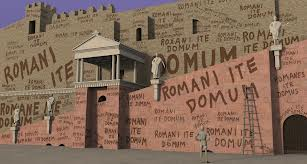
Reza Aslan’s Zealot: The Life and Times of Jesus of Nazareth is an attempt to rehabilitate the *Jesus as a failed military revolutionary* argument that is well-known and well-worn in Jesus studies.  Aslan suggests that Jesus’ regional affiliations (Galilean militants), his enigmatic statement about Roman taxation ( ROMANES EUNT DOMUS ROMANI ITE DOMUM), attempts to keep his “messianic” aspirations a secret (a retread of Aslan’s undergraduate senior thesis), and a few of Jesus' statements about social discord make him a good fit as a proto-Zealot.  There’s more to his case, but almost every suggestion he makes in support of his thesis is as tenuous as the four mentioned here.

The strongest element of his case is the fact of the crucifixion. The fact that Jesus was executed as “King of the Jews” suggests that at least some Roman authorities recognized him as a political insurgent.  But this is not nearly enough to build the case that Aslan is trying to build: that Jesus was probably preparing his disciples for a militant uprising.

To be taken seriously on this point, Aslan would have to interact with David Chapman and/or Gunnar Samuelsson.  These scholars represent the most up-to-date researchers on the crucifixion in Jesus’ world.  Aslan cites neither.  If this key element of the book had been researched with more care, Aslan might have had a better chance of overcoming the many other deficiencies of this book.

Jesus’ preaching about God’s kingdom is undoubtedly political.  It makes sense that this teaching was directly related to the title posted on the cross (and/or the symbolic value of that title in Christian memory).  This much is not all that controversial.  Defining “political” is the key problem.  Reza Aslan’s book barely touches the vast sea of literature on this problem.  In short, this book is a surface-level (albeit well-promoted) rehash of an old puzzle in Jesus research.  Unfortunately, Aslan brings nothing new to the table that will help us solve the puzzle. He simply dismisses all of Jesus’ sayings about nonviolence as Christian invention.  This move isn’t unheard of, but he fails to make his case for invention adequately.

What has made this book controversial is not what Aslan says in the book.  What makes this book controversial is that many "Jesus consumers" (I just coined that phrase and I’m pretty proud of myself) are uncomfortable with Jesus books written by other-than-traditional-Christian authors.  Indeed, much has been make about Aslan’s lack of credentials, but was C.S. Lewis’ claim to expertise any different? [Insert your favorite Narnia joke here.]  —No—  Aslan might be guilty of inflating his résumé, but this is not what made the book controversial.  Sadly, I would welcome more other-than-traditional-Christian scholars in the field.  I really wish that I could endorse this book if for no other reason than to promote diversity.  I am convinced that the American news media’s fascination with Christian-Muslim relations has overshadowed the merits of Aslan’s thesis… or lack thereof.

There it is. If you were looking for a short review of Zealot by an established Jesus geek with fancy degrees, this is mine.  The rest of this review will be of less interest to casual "Jesus hobbyists" (I just coined that phrase too… I ought to drop the mic and walk off the stage now).

Is the Era of the White Whale Over? - Le Donne

Today I sat down to write my encyclopedia entry for the The Oxford Encyclopedia of Bible and Theology.  I was invited to write the entry for

"David, son of"

This title was the central test case for my proposed historiography in The Historiographical Jesus: Memory, Typology, and the Son of David. This book grew out of my Durham University dissertation of the same title.  For more on this book, see here.

In picking up this topic again, I have started to familiarize myself with how the research has evolved since I wrote the book. What is more striking by far is not the content of the research, but the media by which the content can be accessed. I began writing my dissertation in 2002.  At that time I remembered thinking, how on earth did Joseph B. Lightfoot (or James D.G. Dunn for that matter) research and write without a computer?  It still baffles the mind.  I have heard horror stories of 3X5 cards cataloged in shoe boxes. The stuff of nightmares!

But equally baffling is the dramatic advances made in virtual access just in the past ten years. For example, today I found myself staring, mouth agape, at an online pdf of Terence Mullins' "Jesus, the Son of David." This article was one of my white whales in 2002. I was hellbent on reading everything there was to read on the topic and I simply could not get my hands on this essay.  The Durham University library is great, but this particular essay was nowhere to be found. I put in requests for inter-library loans to no avail. Other requests to Cambridge were met in a timely manner, but the library gargoyles were having fun at my expense in this case.  This story is not uncommon among researchers.  We all have our white-whale stories.

It occurred to me today that had I waited a decade to write my dissertation, I might have spent considerably less time trying to harpoon a single essay.  The era of the personal computer, the era of research software, the era of online access... my generation has no idea what it must have been like for our forebears.  Yes, we have much more primary and secondary literature to read, but there is really no comparing these eras.

-anthony

My Interview with Josh Mann - Le Donne

Josh Mann interviews me about blogging over at his blog. His "Press Publish" series is an avenue for research for a forthcoming paper on blogging in religious studies.

Check in with Josh early and often to see more in this series.

-anthony

Tuesday, July 30, 2013

Did Reza Aslan Lie about His Credentials? - Le Donne

The FOXNews interview with Reza Aslan that went viral yesterday has spurred much discussion about his credentials. This article at first things accuses Aslan of being a liar. The final paragraphs are most telling:
It may be that Aslan sensed a tougher interview from Lauren Green than he is accustomed to. Hence he immediately went into high-dudgeon mode, and made the ten minutes all about her alleged disrespect of him and his alleged scholarly credentials. But in order to change the subject he told a string of gratuitous falsehoods about himself. Perhaps that master’s in fiction writing came in handy. 
Is Aslan’s book worth reading? I have no idea. But he has earned enough distrust from me that I haven’t any interest in finding out.
If by "tougher interview" Matthew Franck means "unprofessional, Islamophobic farce", I would agree. It pains me to say this, but both the interview and this First Things article seem to be motivated by religious distrust. A more considered line of questioning comes from Stephen Prothero. Prothero writes on Facebook:

Monday, July 29, 2013

Wife of Jesus - Pre-order My Newest Book at Amazon - Le Donne

Save five dollars by pre-ordering now.

Reza Aslan on FOXNews (embarrassed to be a human today) - Le Donne

In the past few hours, I have been alerted by five different friends of this interview of Reza Aslan by Lauren Green of FOXNews.  If you are a human who would like a reason to be ashamed of your species, I highly recommend viewing the nine-minute interview.

I have been asked about Aslan several times since his book Zealot: The Life and Times of Jesus of Nazareth was published. To see some preliminary thoughts on this book by friend of The Jesus Blog, Larry Behrendt, click here. I am only a few chapters into the book myself, so I will withhold my thoughts on the book itself for now. A few words are warranted about this debacle of an interview.

Lauren Green begins the interview in an almost accusatory tone. According to Green, the most important thing to know about Aslan is that he is a Muslim. She barely veils her contempt and is openly offended that a voice from Islam might have something to say about Jesus. She repeatedly returns to the fact of Aslan's heritage and faith. I think that this fact is interesting. Aslan disputes a handful of beliefs about Jesus by the Qu'ran and Hadith. I also think that a case might be made for an anti-American agenda (I will have to finish the book before I can speak intelligently about this). For both of these reasons, I think that asking Aslan about his motives for writing the book are warranted. But Green does so without courtesy or tact. Because she will not accept his answer, this interview fails to cover almost any of the topics related to the book. That Green calls the exchange "a spirited debate" at the end is comical. As one friend wrote me, the interview was "quite an exercise in refusing to listen to each other."

For Aslan's part, it is generally bad form to cite one's credentials rather than supporting the merits of one's argument. Green made it about Aslan's qualifications, so Aslan was well within bounds to do so once. But to do so repeatedly sounds a bit like Anchorman's Ron Burgundy: "I'm kind of a big deal." One of the biggest problems with Aslan's book is that he has several blindspots in his research. The most embarrassing moment of the interview might be when he points out how many footnotes are in the book. The other quote that came to mind was from Hamlet's Queen Gertrude: "The lady doth protest too much."

Thank you, FOXNews. We're all just a little bit less intelligent because of you.


p.s. Some interesting discussion re: Aslan's qualifications on Jim West's blog.
http://zwingliusredivivus.wordpress.com/2013/07/29/is-reza-aslan-a-liar/

To read my review of Aslan's book:
http://historicaljesusresearch.blogspot.com/2013/07/a-usually-happy-fellow-reviews-aslans.html

___
Anthony Le Donne (PhD) is the author of The Wife of Jesus: Ancient Texts and Modern Scandals.

Friday, July 26, 2013

David Williams on Faith and Scholarship - Le Donne

I've been really impressed with David Williams' two posts under the heading:

Why You Must Be Dying to be a Christian Scholar

At the risk of damning him with faint praise, this guy really gets it. It is greatly encouraging to be understood - I had almost forgotten how much. Posts here and here.

Thank you David! And have fun on your bachelor party weekend; don't deconstruct anything that I wouldn't.

anthony

Wednesday, July 24, 2013

A Review of Reza Aslan's Zealot


We at the Jesus Blog are pleased to welcome back Larry Behrendt for a guest post. Larry blogs over at http://jewishchristianintersections.com/. If you've seen one of Reza Aslan's recent interviews, you won't want to miss this:

Did The Second Temple Stink? (A Book Review) 
Larry Behrendt

I am predisposed to like Reza Aslan’s latest book Zealot: The Life and Times of Jesus of Nazareth. Aslan is a talented author, he’s not Christian and he’s writing about Jesus. What’s not to like? Another point in his favor: Aslan strives to understand Jesus in the context of Jewish first century Palestine.

But I ran into problems from the outset of Aslan’s book. In the first paragraph of the book’s introduction, Aslan states that “[t]he itinerant preacher wandering from village to village clamoring about the end of the world, a band of ragged followers trailing behind, was a common sight in Jesus’s time – so common, in fact, that it had become a kind of caricature among the Roman elite.” It would be interesting to learn that the roads in Judea and Galilee were so crowded with itinerant preachers and their ragged followers that even Rome took notice! But what causes Aslan to reach this conclusion? His proof is as follows:
“In a farcical passage about just such [an itinerant preacher], the Greek philosopher Celsus imagines a Jewish holy man roaming the Galilean countryside, shouting to no one in particular: “I am God, or the servant of God, or a divine spirit. But I am coming, for the world is already in the throes of destruction. And you will soon see me coming with the power of heaven.”

Monday, July 22, 2013

The Wife of Jesus (my latest project) - Le Donne

Until now I have held my cards quite close concerning my latest book:

The Wife of Jesus: Ancient Texts and Modern Scandals

You can now read the description of my book at the One World webpage:

The idea that Jesus was married continues to fascinate. Look no further than Dan Brown’s The Da Vinci Code for evidence. Or indeed Harvard Professor Karen King’s recent discovery of the so called Gospel of Jesus’ Wife – a piece of ancient papyrus that made the explosive suggestion in 2012 that Jesus and Mary Magdalene were man and wife. But most who address the topic either dismiss the possibility or propound conspiracy theories, often of Christian origins.
Approaching the subject from a fresh, historical perspective and without appealing to sensationalist stories or dismissing Jesus’ sexuality on theological grounds, Le Donne places Jesus firmly within his sociocultural context. By investigating gender and marriage norms – as well as a number of social outliers who defied them – he provocatively argues that Jesus might have been married before he was thirty years of age.  Le Donne then points to several indicators that suggest that Jesus was a sexual non-conformist and probably was single during his public career. It is a quest that illuminates the humanity of Jesus, while also revealing important connections between ancient sexuality and modern spirituality.

Saturday, July 20, 2013

Jesus and Militancy (our latest poll)

After a week of media buzz circa Reza Aslan's Zealot: The Life and Times of Jesus of Nazareth, a few friends have asked me what I think about Jesus' militant uprising. I imagine that readers of The Jesus Blog are more informed than most about such matters (emphasis on the word *imagine*).

So I put it to you: did Jesus literally advocate militancy? 

Vote above and comment below

Thursday, July 18, 2013

My Response to J. Keith Elliott's Review--Chris Keith

Back in 2010, I read one of the most scathing book reviews I'd ever seen.  Unfortunately, it was of my own book, The Pericope Adulterae, the Gospel of John, and the Literacy of Jesus (Brill 2009).  The review appeared in the Journal of Theological Studies and was written by J. Keith Elliott.  You can read it here.  I should also add that shortly before the publication of the review, I won a 2010 John Templeton Award for Theological Promise from the Forschungszentrum Internationale und Interdisziplinaere Theologie at the University of Heidelberg based on the book.  So I received this harsh negative feedback in a context of simultaneously receiving encouraging positive feedback.

Elliott managed in the space of about three or four pages to criticize the cover of the book (which I didn't pick), the foreword of the book (which I didn't write), the price of the book (which I didn't set), the fact that I published a chapter in the form of an article too closely to the publication of the book (the time frame for which I didn't control), as well as my chapter titles and dedications.  He referred to my dedication of the book to a friend, my mother (for having survived two forms of cancer), my wife, and my (at the time) newborn son as "embarrassing and overblown."  He ended the review by taking the words I wrote to my son in the dedications out of context to make it look like I was dismissive of my own study.  The problem was not limited to the unprofessional act of dragging an author's dedicatory words to family members into an academic review that, ostensibly, was supposed to focus on the actual content of the book, though.  On several occasions, Elliott misrepresented the argument of the book and even attributed to me the precise opposite of what I claim in the book.  To this day I have no idea what prompted the review and its tone.  I had never met Elliott in my life prior to the next SBL when I made sure to introduce myself and ask a few pointed questions.

At the time, I offered no formal public response other than a quick comment on Mark Goodacre's blog when Elliott's review came up in the comment thread on Marks' discussion of another negative book review.  Elliott was a very senior scholar in the field of NT textual criticism and I was a very junior scholar.  There was no way for me to respond officially without it looking like sour grapes.  I did appreciate several blog discussions (here and here), though.

Earlier this year, the new editors for JTS learned of the review.  They were shocked and invited a response, offering to publish a formal apology before it.  That response, including the unreserved editorial apology, has now appeared in the online version of JTS and will appear in print in the next volume.  You can access the online version here.

Negative criticism is part of academia and to be expected.  We are not always right and our peers' job is to point that out sometimes.  Thankfully, though, this type of negative criticism is rare.  I appreciate the current editors of JTS taking the unusual step of rectifying such an odd review and offering me a platform to respond.

Update:  Brad Johnson comments on the journal taking responsibility for the review here.

Wednesday, July 17, 2013

Zimmerman and Jesus - Le Donne

My friend Ian posted this on facebook:

Waiting in Mammoth Cave National Park -- so of course the Zimmerman trial was on a TV. Keep in mind. We don't watch TV at home. 
Christopher (age 8): This is the second strangest trial I have ever heard of.
Me: How many trials have you heard of?
Christopher: Two.
Me: What's the other one?
Christopher: Jesus' trial.
Me: Yep, definitely the second strangest. 
Next week, we will read Plato's "Apology".

Tuesday, July 16, 2013

Le Donne and the Son of David--Chris Keith

I'm currently in the midst of finishing revisions on my inaugural lecture, "Social Memory Theory and the Gospels: The First Decade," to be given here at St Mary's in October.  It provides an assessment of social memory theory applications to the Gospels in the past ten years and, yes, of necessity will engage with recent criticisms that I regard as not wholly out of line but seriously misrepresentative of the breadth of the discussion.  I hope this essay will display just how many different applications the theory has already spawned.

Regardless, the writing of this (two-part) essay has provided me the opportunity to reconsider Anthony's  tree-hugger manifesto The Historiographical Jesus: Memory, Typology, and the Son of David (Baylor, 2009).  Anthony is rightly praised for the methodological contribution that this volume makes.  It was at the time the fullest application of memory studies to Jesus studies.  Furthermore, it did not rely solely on memory studies to make its contribution, but rather situated memory studies against a larger hermeneutical backdrop that included discussions of critical realism, Bultmann, Schleiermacher, and the whole kit and kaboodle. 

Unfortunately, though, I don't think Anthony has received proper due for just how groundbreaking the second half of the book is.  To my knowlege, it is the fullest discussion of the Davidssohnfrage.  Anthony argues convincingly that "Son of David," although a Davidic term generally, was more importantly a Solomonic term specifically.  He tracks the reception-history of this typological category and thus provides an excellent discussion of how Mark and Matthew, in their own ways, appropriated the category for Jesus.  It's an excellent demonstration of the methodological principles of the first section of the book in a concrete example--the Gospel authors were influenced simultaneously by their presents and their inherited pasts.

Since I've elsewhere in print criticized aspects of this book, I hope that readers of this blog will take my commendation of these aspects of the study seriously.  Anthony's contribution to scholarly discussion of Jesus as "Son of David" is just as pioneering as his memory research, even if the latter gets all the attention and pitchforks.