Baker Academic

Wednesday, February 17, 2016

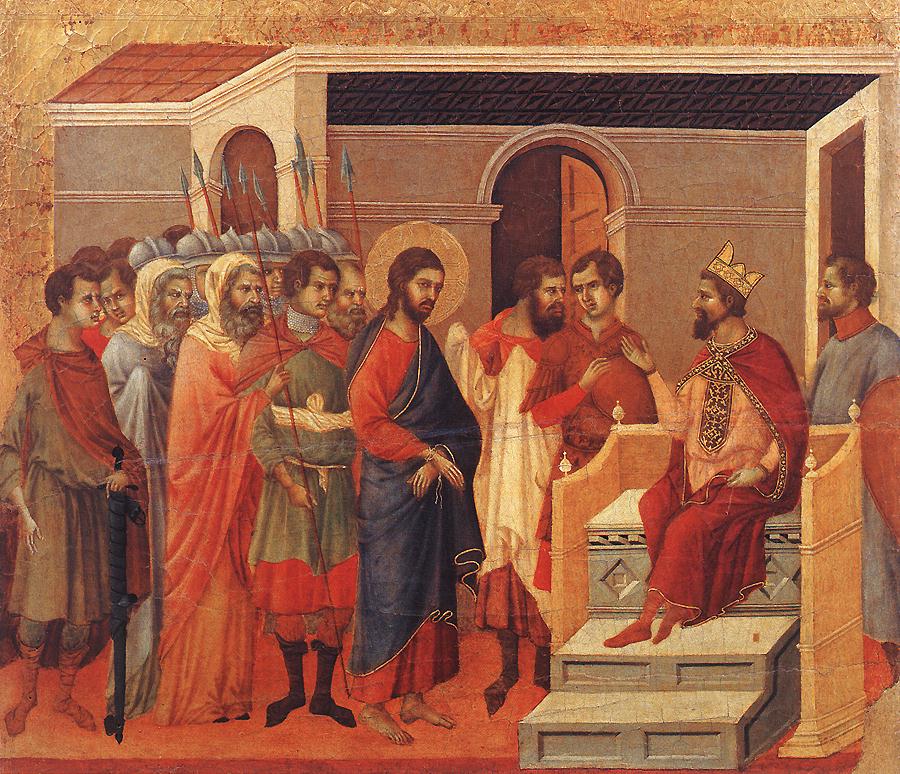
Why Is Jesus Accused of Blasphemy in Mark 14?

This past weekend, I was extremely fortunate to be able to attend the 2016 Greer-Heard Theological Forum entitled “How Did Jesus Become God?,” held right here in New Orleans.


The forum featured a Friday night exchange between and Bart Ehrman and Michael Bird, followed by an extremely stimulating series of Saturday lectures by Simon Gathercole, Dale Martin, Larry Hurtado, and Jennifer Knust. It was a fantastic weekend.

Given the conversation we’ve been having for the last few weeks here at the Jesus blog about the identity of Jesus in the Gospel of Mark, this year’s debate was particularly timely. Although much could be said about it, I’d just like to make two brief points:


Second, during the Q&A, I was fortunate to be able to ask the final question of the night about the charge of blasphemy in Mark 14. My question was basically as follows:

Pitre: “Is Jesus claiming to be divine in his response to Caiaphas in Mark 14? And if he’s not, then why does Caiaphas charge him with blasphemy in the context of a question about his identity?”

You can view Bart’s entire answer here (at 2:36:08-2:40:00). It’s worth watching.

For our purposes, given the discussion we’ve been having about the question of whether Jesus is more than a “merely human messiah” in Mark, I was struck by the fact that Ehrman agrees that Jesus is making some kind of divine claim in Mark 14. Of course, Bart also rightly points out that it is not as explicit as the kind we find in the Gospel of John. As Bart put it in response to my question:

Ehrman: “So, is it a divine claim? Well, yeah, kind of, I mean it is, yeah kind of, but it’s not like Jesus saying ‘I and the Father are one’.” (2:39:23)

Now, if Ehrman is right here—and I think he is—then Mark’s Gospel climaxes with Jesus making a divine claim in response to a question about his identity. To be sure, it is not as explicit as some of the claims in the Gospel of John—to say nothing of later christological formulations in the New Testament and beyond.

Nevertheless, however one interprets the exact meaning of the allusions to Daniel 7 and Psalm 110, and whatever one makes of the question of historicity, on the level of the Gospel narrative, what is clear is that Caiaphas and the Sanhedrin regard Jesus’ answer to the question about his identity as so blasphemous that it is deserving of death (Mark 14:64). One thinks here of the words of Philo, who decries any “man” who “has dared to compare himself to the all-blessed God” (On Dreams 2.130), or of Josephus’ statement that anyone who “blasphemes God” should “be stoned, then hung for a day…” (Antiquities 4.202).

In short, the best explanation for the Sanhedrin’s reaction is that Jesus is making some kind of divine claim. In the words of Adela Yarbro Collins:

Yarbro Collins: “In this saying [Mark 14:62] Jesus claims to be a messiah of the heavenly type, who will be exalted to the right hand of God (Ps 110:1). Being seated at the right hand of God implies being equal to God, at least in terms of authority and power. The allusion to Dan 7:13 reinforces the heavenly messianic claim.” (Adela Yarbro Collins, Mark [Hermeneia; Minneapolis: Fortress, 2007], 706 [emphasis mine])

As I point out in The Case for Jesus, this is one of the main problems with the oft-repeated assertion that Jesus only makes divine claims in the Gospel of John. To the contrary, in the Gospel of Mark, the controversy about Jesus begins with accusations of “blasphemy” against him for doing something that only “the one God” (εἷς ὁ θεός) can do when he declares the sins of the paralytic forgiven (Mark 2:3-12). [Notice here that the expression “the one God” is often obscured by English translations (cf. Deut 6:4; see Yarbro Collins, Mark, 185).] Moreover, the public ministry in Mark climaxes with a formal charge of “blasphemy” when Jesus answers Caiaphas’ question about his identity (Mark 14:53-65).

So, what are your thoughts? Is Jesus claiming to be divine in his response to Caiaphas in Mark 14? And if he’s not, then why does Caiaphas charge him with blasphemy in the context of a question about his identity?

And keep in mind—as Ehrman rightly pointed out—that, despite what many Christians assume, it isn’t blasphemy to claim to be the messiah.

Monday, February 15, 2016

Quarterly Quote of the Month about Jesus for this Week


"A line not always straight, but nonetheless continuous, leads from the anthropomorphisms of the earliest pages of the Bible, to the incarnation of God in Jesus Christ."

               ~Edmond Jacob

Thursday, February 11, 2016

Wednesday, February 10, 2016

Is Christology the Wrong Category?

To continue the ongoing conversation on Mark's notion of Jesus' Divinity, divine agency, or lack there of, I ask a simple question: is "Christology" the wrong category by which to measure Mark's Gospel? 

In asking this question I assume a few things and I should make these assumptions clear:
(1) GMark uses the term Christos as a category for Jesus. Furthermore, it seems clear that one of GMark's unfolding plot lines involves revealing and demonstrating what this means.
(2) Some form of the parallelism represented by Romans 1:3-4 was in circulation prior to Mark's composition. I.e. some folks in the early Church were meditating on Jesus' significance in similar language/titles that we find in GMark.
(3) It is almost impossible not to view these titles (Christ; Son of God; Lord) and language (death and resurrection) without using the theological categories of a much later Christian period.

Points one and two suggest that GMark exists in a world of theological categories and that something like "Christology" was already unfolding. Point three suggests that if indeed Christology (or a like category) was a concern of GMark, it was a category under construction as opposed to something that was doctrinally stable.

Of course NT scholars have been using the term "messianism" for sometime now. Part of the reason for this is to sidestep some of the problems of anachronism. But in my experience, the category of "messianism" can bring the same Christological assumptions to the text.

So I am curious to hear your thoughts: is "Christology" the wrong category by which to measure Mark's Gospel?

-anthony

Monday, February 8, 2016

Thanks for the Great Conversation about Mark's Gospel: And Happy Mardi Gras!

Just a couple quick notes to everyone out there:

First, I wanted to thank everyone--especially Anthony and James--for their excellent posts and for the ongoing conversation about the identity of Jesus in Mark. I'm thrilled to be part of this blog and truly grateful for the discussion. So rich and stimulating.

Second, I'm sorry that I wasn't able to respond immediately to all the great comments on my original post about whether Jesus is merely a "human messiah" in Mark. I've been away at a conference for several days and needed a bit more time to read carefully through the excellent and thought-provoking comments. However, if you're interested, I've posted some brief replies to your comments on the original post.

Finally, straight from the heart of South Louisiana, I'd like to wish all the readers of the Jesus Blog a very Happy Mardi Gras. I'll be putting down the keyboard for a few days in order to spend time with family and friends and eat as much King Cake as I can before Ash Wednesday falls upon us.

Happy Mardi Gras everyone!


Friday, February 5, 2016

Dear James: Alan from Norwich Writes about Markan Christology

Now I've read just over half of the letters that have come in, I don't feel as guilty about picking one out. At random, I chose this one from Alan, Norwich (UK).
Dear James,
Sometimes even a car fan such as myself likes to escape the hellish congestion around the A1042 Ring Road and go on my weekly country ramble. With my faithful Labrador Retriever, Bouncer, we set off to the north Norfolk coast for a delightful meander, taking in Blakeney, Stiffkey, and Warham. With Bouncer off chasing anything that ruddy well moves, I snapped off a branch for a makeshift walking stick and began thinking about the recent blog discussions on Markan Christology. Is it high or low? What do bloggers mean by "divine"? So piqued was my interest that I decided not to visit the local owl sanctuary but instead stop for a pint of Woodforde's Real Ale at Wells-next-the-Sea and google agony aunts specifically geared towards answering questions about Jesus. Lo and behold, such a thing exists on a blog which has been at the centre of these Christological debates! I appreciate that agony aunt genre has constraints and there is absolutely no need to spend time linking to, or engaging with, the other discussions as they are easy to find. But, please, could you give us some brief thoughts?
Yours,
Alan,
Norwich (UK)
Cheers Alan, lovely stuff. While some complain about the flatness of that part of the world, I share your appreciation for the local environment. I won’t engage with all the blogs due to the aforementioned constraints and I appreciate you allowing me the freedom to blog out loud on this.

First, we have to ask ourselves, what do we mean by ‘divine’ and ‘high’ and ‘low’? By ‘divine’ do we mean Jesus presented as something like co-equal with God? Do we mean Jesus is like an angel or an elevated figure like Moses,Melchizedek, Messiah, or Enoch? Remember the language of theos or El/Elohim can be applied the God of Israel but it is not technically the name of this god and it is language that can also be used to describe angels or elevated figures.

So already we face problems. In the case of Mark (and here I may be echoing issues raised by Le Donne), we don’t necessarily have direct narrative indications as we do in (say) John 5 or John 10 where equality with God (whatever that might precisely mean) is flagged up and deemed problematic for ‘the Jews’. There aren’t really such conflicts of this variety in Mark. What we have are gaps in our knowledge and scholars inevitably try and fill these gaps. Some, on the blogs, have turned to textual clues, but even these are ambiguous.

Let’s start with blasphemy. Is this an indication of something divine? Maybe. Johannine equality? Not so clear. ‘Blasphemy’ can cover accusations of different sorts, including legitimacy to serve in the priesthood(Ant. 13.293-295; cf. Lev. 21.14), with one side (in this case a Pharisee) calling for the high priest to step down and the other (in this case a Sadducee) calling blasphemy.

Let’s next take nature miracles. In Mark 4.35-41, Jesus stills the wind and the sea and the disciples are awestruck. In Mark 6.45-52, Jesus walks across the stormy waters and the storm is again stilled. This passage contains the much discussed ‘I am he’ (6.50) which, it is often argued (including here on the Jesus Blog by Pitre), echoes God’s use of the ‘I am’ formula (Exod. 3.13-14). Does this indicate Johannine-style divinity, Alan? It remains unclear, does it not? Taking on divine ‘attributes does not necessarily equal being equal with God in the strongest possible sense. There are (as is sometimes noted) rabbinic stories about figures who act similar to Jesus in the Gospel stories (e.g. Pesiq. R. 36.1; Pirqe R. El. 10; b. BM 59b). From b. BM 59b we might also note the naughty R. Eliezer who has mastery over the elements without appeal to God. And his ability to carry out miraculous deeds does not appear to be controversial (unlike Eliezer’s halakic decisions):
It had been taught: On that day R. Eliezer brought forward all the arguments in the world, but they did not accept them. Said he to them:‘If the halakah agrees with me, let this carob-tree prove it!’ Thereupon the carob-tree was torn a hundred cubits out of place – others affirm, four hundred cubits. ‘No proof can be brought from a carob-tree,’ they retorted. Again he said to them: ‘If the halakah agrees with me, let the stream of water prove it!’ Whereupon the stream of water flowed backwards. ‘No proof can be brought from a stream of water,’ they rejoined.
Another rabbinic story worth mentioning in relation to walking on water is Gen. R. 2.4 (on Gen. 1.2) where the spirit of the Messiah hovers just above the water. I know what you are thinking, Alan: aren't such stories late, much later in certain cases? Of course! But, even after ‘Christianity’ (or whatever you want to call it) had emerged, such miraculous stories could continue without problem. And there are, of course, earlier stories. Philo’s description of Moses, who is called ‘god and king of the whole nation’, included some mastery over creation:
For, since God judged him worthy to appear as a partner of His own possessions, He gave into his hands the whole world as a portion well fitted for His heir. Therefore, each element obeyed him as its master, changed its natural properties and submitted to his command… (Vit Mos 1.155-156)
Compare the similar language in Mk 4.41: ‘Who then is this, that even the wind and the sea obey him?’ I’d use Greek, Alan, but it’s a bit of a hassle right now. Nevertheless, the linguistic similarities are there if you check. Another text (sometimes noted) is the description of the anointed figure in 4Q521: ‘[for the heav]ens and the earth will listen to his anointed one…’ Hopefully now you can see that the Markan miracles do not necessarily have to be taken as indicating divinity in the strongest possible sense.

What about ‘I am (he)’? Again, we should be cautious given that elevated figures can take on attributes of YHWH. What’s more, the phrase can be used in a banal sense by human beings (as Pitre points out) and so context is crucial. Some points worth observing here. In Mk 6.49-50, it is used by Jesus to inform the disciples that he is not a ‘ghost’. Contrast John 18.5-6 where people step back and fall to the ground when Jesus says ‘I am (he)’. This use is not quite what we find in Mark. Are not the disciples awestruck, Alan, because the elements obey Jesus rather than his use of ‘I am’?

More could be said but you get the idea. Another complicating factor is audience. How might the audience(s) have interpreted this? How might the author or authors of Mark have interpreted his/their own text? Well, we don’t know very much. Given that we have seen experts on the Bible blogging different possibilities, presumably ancient experts in the Bible (or non-experts) have read divinity in the strongest sense into Mark. But, prior to John, we don’t know. Mark and his community or communities or audience or audiences may or may not have worshipped the fully divine Christ but we lack the sort of evidence that we have in John’s Gospel and we are always left with that difficult question: why are the Johannine Christological controversies not present in Mark?

I hope that helps you ponder, Alan, and I hope it helps the real ale go down smoothly.
James

If you have a question to contribute to "Just Ask James" email to DearDrCrossley@gmail.com.

Thursday, February 4, 2016

Markan Christology: Low, Underdeveloped, or Understated?

Yesterday Dr. Pitre weighed in on the recently revived Markan Christology debate with a wonderful reflection on the walking-on-water episode in Mark 6. Brant reminds us that John Meier, Joel Marcus, Adela Yarbro-Collins, Eugene Boring, and Richard Hays (thus a nice spectrum of fantastic scholars) take Jesus’ egō eimi saying to suggest Jesus' divine status in some sense. If we add Pitre's name, this list becomes even more formidable! We are then left with the question, in what sense is Jesus portrayed as divine? Does Mark put forth Jesus as a manifestation of Divinity, as a semi-divine agent, or as someone who benefits from divine agency as a mediator of the divine? As I mentioned in the comments section, I think that the debate is fascinating. I am not certain whether the Second Gospel is quite as explicit as the Fourth Gospel on this matter and I am committed to reading both on their own terms.

Traditionally NT scholarship (and Brant links a few readers along these lines) concludes that Mark must be read as a representation of lower Christology. I have tended to think of Mark, rather, in terms of a collage of underdeveloped and inconsistent images of divine agency. So I am not opposed to reading Mark 6 (for example) as a wink and nod toward Divinity. Brant points out that in conjunction with the "It is I" or "I AM" statement in Mark 6, Jesus intends to pass them by [καὶ ἤθελενπαρελθεῖν αὐτούς]. I would add also that in addition to egō eimi Jesus also says the equivalent of "fear not!" which is suggestive of like theophanic episodes [ἐγώ εἰμι, μὴφοβεῖσθε]. Brant intriguing plays up the "passing by" statement as an echo of theophany (cf. Job 9:8 LXX).

The most cautious solution would be to call these hints toward Divinity inconclusive. But what is the most we could say? Mark is echoing, hinting, winking. Let's play along for a moment and affirm that Mark is indeed intending a statement of Jesus' Divinity (in some sense) with this episode. Can we agree that whatever statement is being made, it is understated?

If indeed we can agree that Mark is understating his Christology here, what do we make of the fact that Jesus intends pass them by but doesn't do it? The language of "passing by" in this context is intriguing language to be sure. But Jesus ends up not doing it and instead gets into the boat. It's like we almost get a symbol for Divinity and then we don't quite get it. Rather than transcendence we get immanence.

This is just the sort of thing that I love about Mark's Gospel! Is it enough to revel in the beauty of the ambiguity here? Must we connect the dots in a Johannine way?

-anthony


Wednesday, February 3, 2016

Is Jesus Merely a “Human Messiah” in Mark?


The question of Markan “Christology” has recently been in the biblioblogosphere. In particular, I’ve been following with interest the back and forth between Michael Bird, James McGrath, Dustin Smith, some quotes from Daniel Kirk, and Joel Watts on the whole question of Mark’s presentation of Jesus’ divine identity.

In particular, I was struck by Smith's claim that “Mark makes no attempt to suggest, imply, or hint that Jesus is anyone other than the human Messiah...” (emphasis added)

Jesus Walks on the Sea: “I Am”
I’d like to throw my hat into the ring by calling attention to one passage that sometimes gets overlooked in the debate over Jesus’ divine identity in the Gospel of Mark: the account of Jesus’ walking on the sea:

When evening came, the boat was in the midst of the sea, and he was alone on the land. And seeing that they were struggling to row because the wind was against them, he came towards them in the fourth watch of the night, walking on the sea. He wanted to pass them by. But when they saw him walking on the sea, they thought it was a ghost and cried out; for they all saw him and were terrified. But immediately he spoke with them and said to them, “Take heart, I am; do not be afraid.” Then he got into the boat with them and the wind ceased. And they were greatly amazed, for they did not understand about the loaves, but their hearts were hardened. (Mark 6:47-52)

Several aspects of this text, especially when situated in an ancient Jewish context, strongly suggest that Jesus is being depicted as the God of Israel.

1. Jesus’ ἐγώ εἰμι Saying in Mark 6:50 and the Name of YHWH
First, there is Jesus’ declaration to the disciples. Although most translations have Jesus declaring: “Take heart, it is I” (e.g., NRSV), the original Greek form is absolute: “Take heart, I am” (Greek ἐγώ εἰμι) (Mark 6:50)

Now, it is of course true that the expression “I am” can be used to identify oneself when a predicate is used in an immediately preceding statement (e.g., 2 Sam 2:20; John 9:9). On the other hand, as is well known, “I am” (Greek ἐγώ εἰμι) is also the divinely revealed name of God to Moses on Mount Sinai:

Then Moses said to God, “If I come to the people of Israel and say to them, ‘The God of your fathers has sent me to you,’ and they ask me, ‘What is his name?’ what shall I say to them?” God said to Moses, “I AM WHO I AM.” And he said, “Say this to the people of Israel, ‘I AM has sent me to you.’” (Exodus 3:13-14)

Is this Old Testament background significant? Or is Jesus simply identifying himself? Given the context of Jesus’ astonishing demonstration of power over creation, many scholars think that Jesus “I am” statement here is evocative of the Old Testament theophanies. To take but a few recent comments on Jesus’ walking on the sea in Mark 6:

John Meier: [W]hile the “surface meaning” of egō eimi in the Gospel narrative is “It is I,” the many OT allusions… intimate a secondary, solemn meaning: the divine “I am.” (Meier, A Marginal Jew [ABRL; New York: Doubleday, 1994] 2.918 [emphasis added])

M. Eugene Boring: Jesus speaks to them in the words God uses as his own formula of self-identification: ‘I am’ (Exod 3:13–15 and repeatedly in Deutero-Isaiah, e.g., Isa 41:10; 43:10–13, 25; 45:6, 18, 22; 48:12)… The Greek egō eimi at the pedestrian level merely indicates identity, like the colloquial ‘it’s me,’ as in John 9:9. But in the context of all the other marks of divine epiphany, the phrase here must have the connotation of the divine self-revelation, the disclosure of the divine name as YHWH, the one who says absolutely, ‘I am.’ (Boring, Mark: A Commentary (NTL; Louisville: Westminster John Knox Press, 2006], 190 [emphasis added].)

Adela Yarbro Collins: “Jesus is being portrayed here [in the walking on the sea] as divine… (Mark [Hermeneia; Minneapolis: Fortress, 2007], 335)

Once again, taken in isolation, “I am” can simply mean “it’s me”. But in the context Jesus’ extraordinary manifestation of power over creation, “I am” functions as a revelation of his divine identity. In other words, in a first-century Jewish context, the account of Jesus walking on the sea is not just an epiphany, but a theophany--a revelation of his divine identity to his disciples.

2. Jesus Wanted to “Pass Them By”?
Should there be any doubt this, it’s important to highlight an otherwise puzzling detail of the walking on the sea: the uniquely Markan statement that Jesus "wanted to pass them by” (ἤθελεν παρελθεῖν αὐτούς) (Mark 6:48) What are we to make of this detail?

Once again, the significance seems to be found by looking carefully at Old Testament theophanies. For in Jewish Scripture, when YHWH appears and reveals his name, he also “passes by”.  Consider the two classic theophanies to Moses and Elijah on Mount Sinai. In both cases, it is the God of Israel—YHWH himself—who “passes by” the human recipients of the theophany:

[The LORD said to Moses:] “I will make all my goodness pass before you, and will proclaim before you my name ‘YHWH…  While my glory passes by I will put you in a cleft of the rock, and I will cover you with my hand until I have passed by...” The LORD passed before him, and proclaimed, “YHWH, YHWH, a God merciful and gracious, slow to anger, and abounding in steadfast love…   (Exodus 33:19, 22; 34:6)

[God said to Elijah:] “Go forth, and stand upon the mount before YHWH.” And behold, YHWH passed by… (1 Kings 19:11)

In each of these cases, the Greek Septuagint uses the exact same verb for “passing by” (παρέρχομαι) as we find in Mark’s statement that Jesus wanted to “pass them by” (παρέρχομαι) (cf. Mark 6:48 with Exod 33:19, 22; 34:6; 1 Kings 19:11 LXX).  What are we to make of this striking coincidence? I agree with John Meier and Joel Marcus:

John Meier: Clearly, in such a context the verb parerchomai (“pass by”) refers to an epiphany in which Yahweh or Jesus wills to draw close to someone so as to be seen in transcendent majesty, to proclaim his identity… The conclusion from all this is clear: the verb parerchomai in Mark 6:48 intends to present Jesus walking on the water in terms of an OT epiphany. (Meier, A Marginal Jew [ABRL; New York: Doubleday, 1994] 2.917 [emphasis added]).

Joel Marcus: In this OT text [Exod 33-34] God’s “passing by” is accompanied by the proclamation of his own identity as a gracious and merciful deity (Exod 34:6);in  our narrative, similarly, Jesus identifies himself… (Marcus, Mark 1-8, 432 [AYB; New Haven: Yale University Press, 2001], 432 [emphasis added])

Now, if in the OT God proclaims his identity by “passing by,” then it stands to reason that when Jesus “passes by” he is doing the same thing: proclaiming his divine identity: “I am.”

3. The Context: “I Am” + Walking on the Sea
Third and finally: if any doubt should remain, however, I would call attention to one last point. Once again, the meaning of the words “I am” in Mark 6:50 must be determined by the context. And in context, Jesus doesn’t just say “I am”; he declares “I am” while walking on the sea.

The reason this context is important is because, in the book of Job, it is God alone who is said to walk on the sea:

Then Job answered: “…How can a mortal be just before God?…
[He] who commands the sun, and it does not rise; who seals up the stars;
who alone stretched out the heavens and trampled the waves of the Sea
who does great things beyond understanding, and marvelous things…
Look, he passes by me, and I do not see him,
he moves on, but I do not perceive him. (Job 9:1-2, 4-11)

Intriguingly, in the Septuagint, the following detail:

 “Who alone…. walks on the sea as on dry ground
(περιπατῶν ὡς ἐπʼ ἐδάφους ἐπὶ θαλάσσης) (Job 9:8 LXX).  

In light of such parallels, Richard Hays recently wrote:

Richard Hays: In this narrative context, there is little doubt that we should also hear Jesus’ comforting address to the disciples (“It is I” [ἐγώ εἰμι]; do not be afraid” [6:50]) as an echo of the self-revelatory speech of the God of Abraham, Isaac, and Jacob speaking from the burning bush in Exodus 3:14… Thus, when Jesus speaks the same phrase, “I am,” in his sea-crossing epiphany, it serves to underscore the claim of divine identity that is implicitly present in the story as a whole. (Hays, Reading Backwards: Figural Christology and the Fourfold Gospel Witness [Waco: Baylor University Press, 2014], 26).

I have to confess, I never saw this clearly before reading Hays’ recent book. But I should have, since it was also pointed out some time ago by David Friedrich Strauss, who states that Jesus’ “ascendancy over the law of gravitation” (nice!) is in effect to “exhibit himself, as it is said of Jehovah, Job ix.8, LXX., περιπατῶν ὡς ἐπʼ ἐδάφους ἐπὶ θαλάσσης , walking upon the sea as upon a pavement.” (Strauss, The Life of Jesus Critically Examined [London: SCM, 1972], 504].

My New Book on Jesus
Obviously, more could be said. But I post this for two reasons.

First, maybe I missed it, but I saw no references to any of the scholars I cited above in the recent comments by James McGrath or Dustin Smith. I’d love to hear what those engaging in the debate over Mike Bird’s original post think. Are Meier, Marcus, Yarbro-Collins, Boring, and Hays off base to see Jesus’ egō eimi saying in Mark 6 as a reference to the divine name? If so, how does one explain the multiple connections between Jesus walking on the sea and key OT theophanies?

Second, yesterday, I had a new book on Jesus come out from Image Books (Penguin Random House). Just to be clear: I’m not talking about Jesus and the Last Supper, the academic monograph that Eerdmans just published in November 2015. Because I’m a glutton for punishment, I decided to publish two new Jesus books just a few months apart! The new book, entitled, The Case for Jesus, was released yesterday and written for a general audience. At the heart of the new book is the question of the divine identity of Jesus in the Synoptic Gospels. What I’ve shared above is just one small piece of the puzzle.

To sum up: when we combine (1) Jesus’ use of egō eimi, (2) the reference to him “passing by,” and (3) the context of him walking on water (!)—is it really tenable to claim that Mark makes no attempt to “suggest, imply, or hint” that Jesus is anyone other than “the human Messiah”?

So, I’ve got three questions:
1. Are Meier, Marcus, Yarbro-Collins, Boring, and Hays off base to see Jesus’ egō eimi saying in Mark 6 as a reference to the divine name?

2. If Jesus is YHWH in person—and remember, “I am” is the Creator God’s name—then why doesn’t that have implications for the debate over Jesus’ preexistence in Mark?

3. Do you think an academic monograph exploring passages like these would be a worthwhile project?